

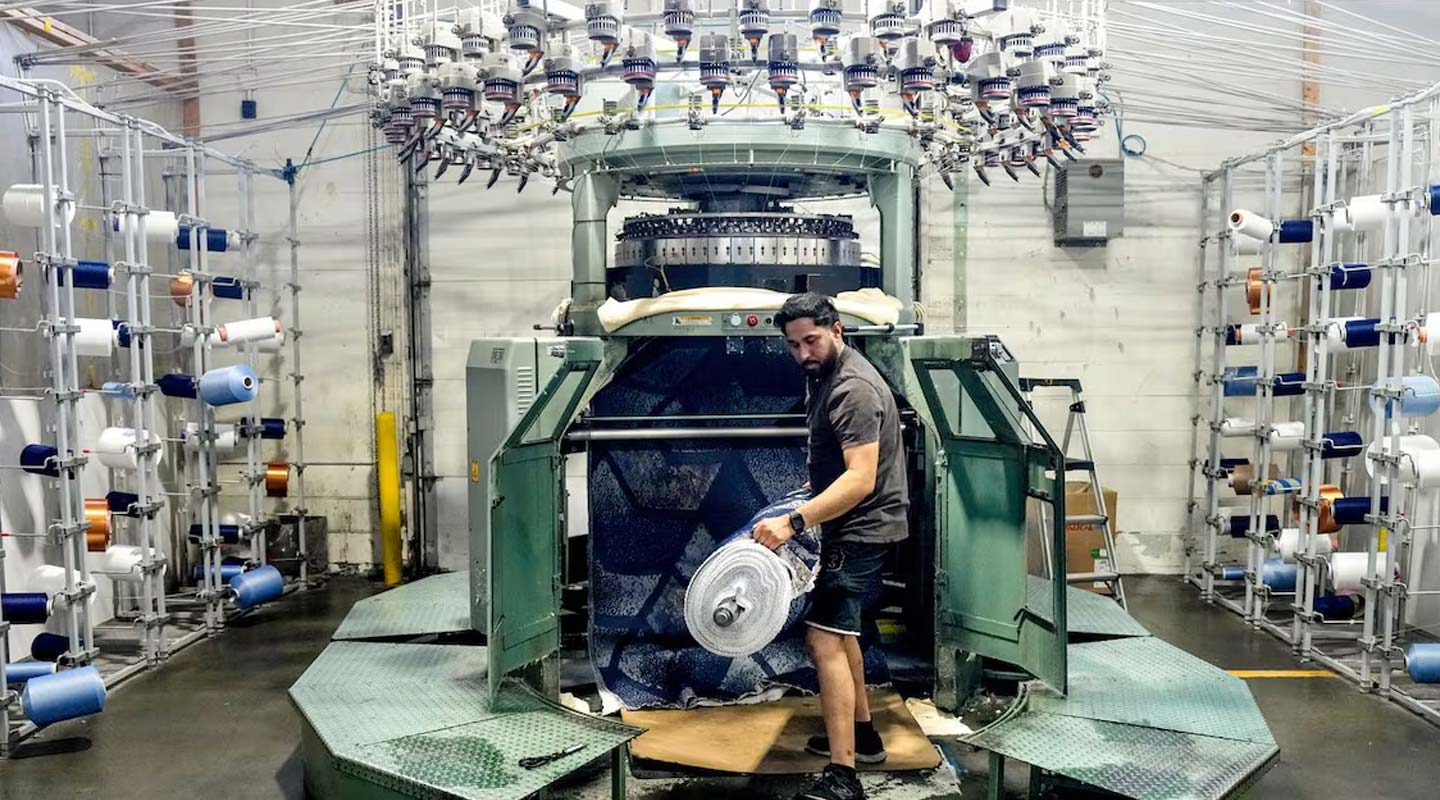
For a Toronto fabric maker, the trade war has stopped being a temporary disruption and become a reason to rethink where it does business. A Canadian textile maker battered by U.S. tariffs is looking to expand south of the border, illustrating how the trade war could leave a lasting mark on the country’s manufacturing sector.
A Toronto mill with an American problem
Fine Cotton Factory Inc. produces fabrics for clothing, mattresses and bedding at its Toronto mill, with roughly half of its sales tied to U.S. customers. That exposure became a liability as tariffs climbed. The company has seen orders decline as tariffs reached up to 50 per cent.
The pressure has not eased. On Aug. 22, 2026, the United States began imposing an additional 50 per cent tariff on specified Canadian imports under Section 338 of the Tariff Act of 1930, covering about $27.6 billion of goods, including some textile and apparel products. The scope was modified effective Sept. 15, and the rate applies even to products that qualify for preferential treatment under the Canada-U.S.-Mexico Agreement. Canada retaliated with tariffs of 15, 25 and 50 per cent on selected U.S. products starting Sept. 8, including textile and apparel items.
A two-step retreat
The company’s response is happening in stages. It is shifting some production to U.S. contractors for additional processing, which reduces its exposure to tariffs on finished products and lays the groundwork for a larger American expansion. The next stage is physical. Fine Cotton’s Kann plans to open a U.S. warehouse, then source equipment and begin production early next year.
Kann was explicit about the motive. He said the company will put some form of its business in the U.S. so this can never happen to it again. In other words, this is insurance against policy risk, and it is not tied to current tariff rates.
Peace may not bring the plants back
The most striking part of the plan is what would not change it. Kann said even the removal of tariffs or a new Canada-U.S. trade agreement may not alter his expansion plans.
That is a warning for policymakers. Much of the political effort in Ottawa has gone into winning tariff relief, and Canada and the U.S. have spoken “within the past few days” about a possible trade deal, according to the U.S. trade representative. But a deal may not undo the strategic damage. Kann pointed to damage done to the relationship between the U.S. and Canada, and said the trade relationship has already pushed the company to move some production to the United States.
Is this a trend?
Analysts are divided on how far the pattern will spread. Statistics Canada figures show Canadian direct investment in the United States was down slightly at the end of 2025. Van Assche said the broader economic picture does not yet point to a major shift of Canadian manufacturing investment south of the border.
Yet the warning signs are there. Van Assche said he knows of another Canadian manufacturer seriously considering a new U.S. plant after facing steep tariffs, although a shortage of skilled workers is complicating its plans. And he cautioned that the numbers could change, saying even companies not facing this pressure may conclude they cannot hold off much longer.
The caution is understandable. When tariffs on Canadian goods took effect in March 2025, some manufacturers put expansion plans on hold and adjusted their supply chains to limit exposure. Waiting has a cost, though. Equipment orders, leases and hiring decisions can’t be put off indefinitely.
Diversification, but in two directions
The week’s other trade stories show Canadian businesses hedging in several directions at once. Seafood exporters that once feared devastating U.S. tariffs are now finding buyers in China. Canada is also courting deeper ties with Australia as the two nations look to diversify beyond the U.S. Fine Cotton’s move is a different kind of hedge, since it plans to keep its customers while moving some production closer to them.
The bottom line
For Canadian workers, the risk is gradual. A Toronto mill that adds a U.S. warehouse and then U.S. production still employs people in Canada today. Each step south, however, makes a return harder to justify. If more firms follow, the pressure on domestic manufacturing could outlast the tariffs that triggered it.
As Kann’s plan shows, ending the trade war may not be enough to restore the old relationship.


0 Comments