

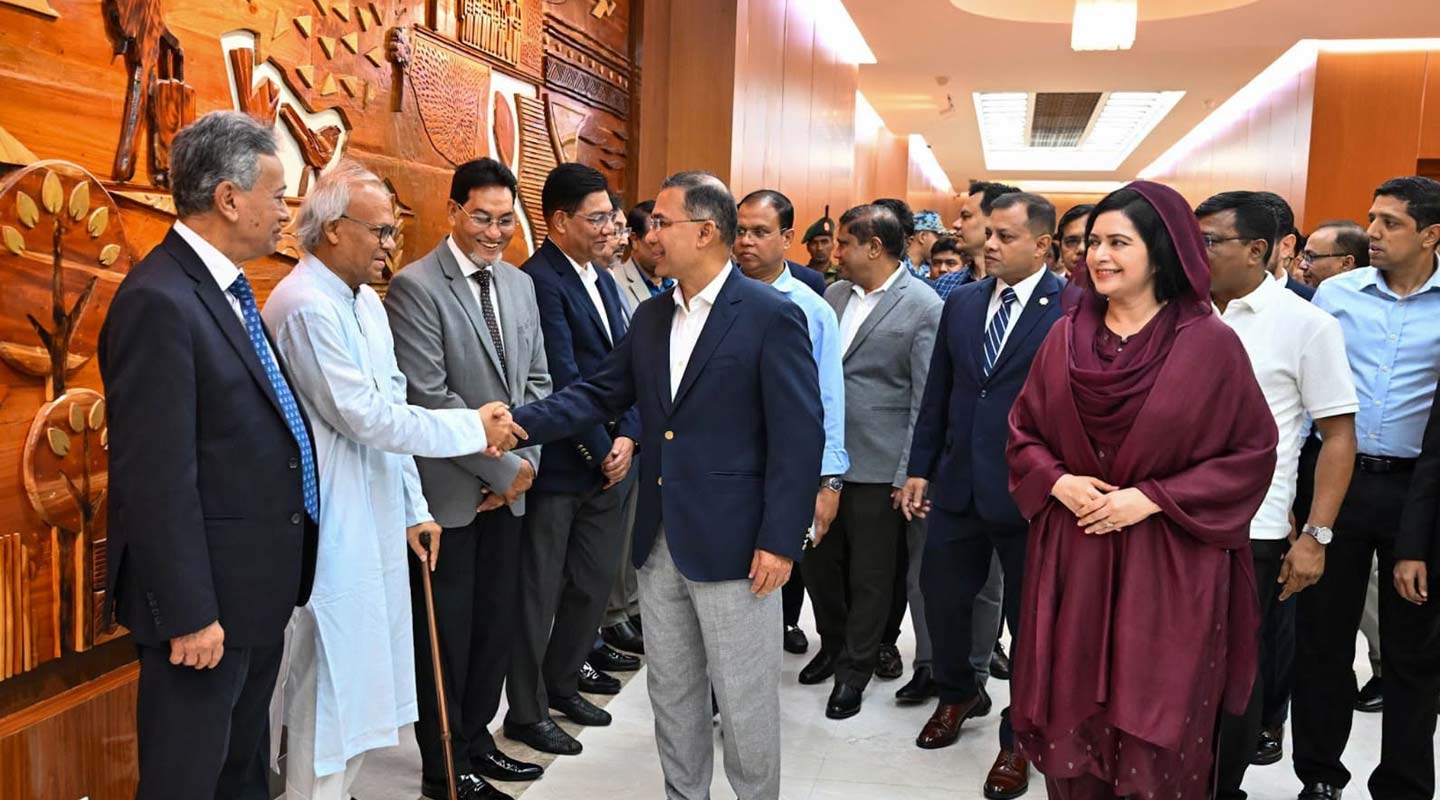
Two South Asian prime ministers took different stages at the UN climate summit this week but carried the same message. The countries least responsible for global warming want help that does not drive them deeper into debt.
Shehbaz Sharif: “survival funds”
Pakistan’s leader addressed the high-level session on Thursday, Nov. 12. Prime Minister Shehbaz Sharif called for grant-based climate financing and a significant increase in resilience and adaptation funds, saying vulnerable countries need timely assistance that does not add to their debt burden. He described adaptation money in stark terms, saying such funds amount to survival funds, especially for struggling economies.
He leaned on his country’s recent history. Recalling Pakistan’s 2022 floods, he said nearly a third of the country was submerged, and that the disaster affected 33 million people, claimed more than 1,700 lives and caused economic losses exceeding $30 billion. The imbalance was central to his pitch. Another report on his remarks noted that Pakistan emits less than 1% of global carbon.
He also made a pledge. Pakistan aims to cut its projected emissions by around 50 percent by 2035, he said. Sharif also added a regional note. He warned against the weaponisation of water, saying water-sharing agreements must be respected and downstream communities protected. Observers will read that as a reference to the Indus Waters Treaty dispute with India, though the reports reviewed did not name India in that passage.
On the sidelines, Sharif met the Finnish president and expressed interest in Finnish expertise in flood forecasting, water management, climate-resilient agriculture, glacier monitoring and early-warning systems.
Tarique Rahman: a five-point ask
Bangladesh’s Prime Minister Tarique Rahman delivered his own appeal at the same segment. He called for grant-based climate financing instead of additional loans for the most vulnerable countries, warning that rising debt burdens make it increasingly difficult to cope with climate-related losses and damage. His fifth proposal was institutional. He urged COP31 to adopt a “Belem-Antalya Action Mechanism” to support a fair energy transition, built on fair financing and fair trade.
Rahman also expressed hope for the outcome. He said Bangladesh expects the conference to deliver meaningful, balanced and ambitious results, particularly for the most vulnerable countries.
Diplomacy on the margins
Rahman used the summit for bilateral business too. He held separate meetings with Australian Prime Minister Anthony Albanese and British Foreign Secretary Ed Miliband, discussing Rohingya repatriation, climate change, investment and bilateral cooperation. Bangladeshi reports described the asks in practical terms. He sought UK support for Rohingya repatriation and climate finance, and urged more Australian investment. His government also promoted its jute pavilion at the summit’s Green Zone. After the trip, Rahman returned home after attending COP31.
Why “grants, not loans” matters
The shared phrase reflects a long-running dispute in climate diplomacy. Developing countries argue that financing climate adaptation through loans adds to debt that is already heavy. Wealthy donors often prefer loans and private investment because they stretch limited public budgets further. Both leaders pushed back on that model, and Sharif explicitly mentioned public-private partnerships as acceptable if they are grant-based.
South Asia has a strong case. The region sees repeated floods, heat waves and glacier-related hazards. Nepal, for example, estimates it needs between USD 18 billion and USD 20 billion in adaptation financing from 2025 to 2035, plus USD 4.78 billion for recovery after the August 2026 Rasuwa–Bhote Koshi floods. That figure comes from a separate Nepali briefing, not from the COP31 speeches, but it shows the scale of the region’s needs.
What to watch
Speeches are cheap, and outcomes are what count. The test will come in the summit’s final text. Will it set clear targets for adaptation finance, and will those targets favour grants? Will a new mechanism like the one Rahman proposed gain traction? And will wealthy countries turn sympathy into commitments?
For millions of people in the region’s flood plains, river deltas and mountain valleys, the answer matters more than the speeches. If COP31 delivers, the next monsoon season may find them better protected. If it does not, South Asia’s leaders will likely be back at the same podium next year making the same plea.
0 Comments