

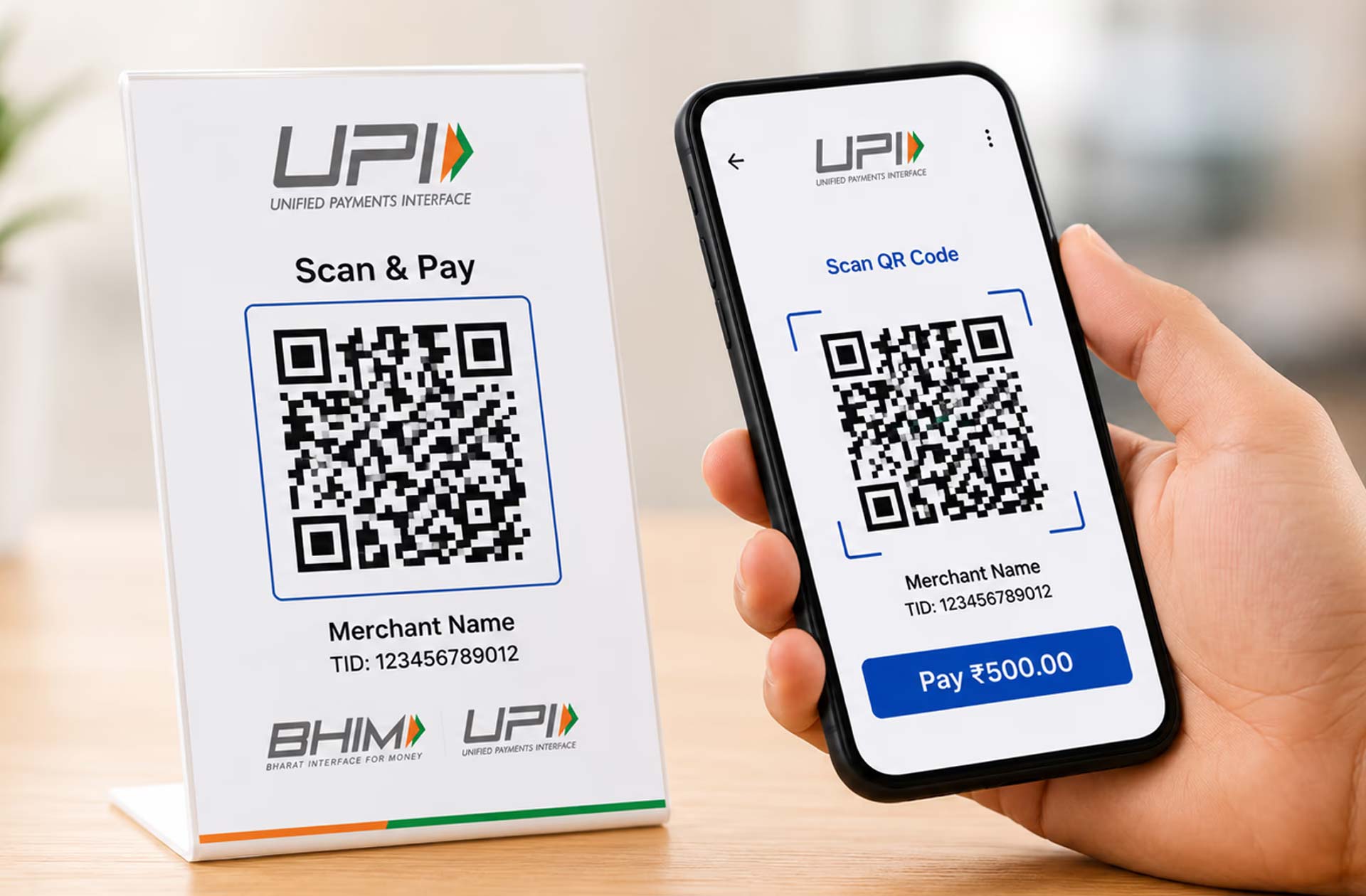
For nearly six years, one of the quiet marvels of India’s digital economy has been something almost invisible to the hundreds of millions of people who used it daily: paying for absolutely everything through the Unified Payments Interface without a single rupee siphoned off in transaction fees. This week, that era began its measured unwind. The National Payments Corporation of India confirmed it will introduce a Merchant Discount Rate — an industry term for the fee merchants pay on digital transactions — on person-to-merchant UPI payments exceeding ?2,000, effective October 15, 2026.
The change formally ends what had been a blanket zero-MDR regime applying to UPI and RuPay debit card transactions since January 2020, a policy enshrined under Section 10A of the Payment and Settlement Systems Act, inserted into law in 2019 specifically to encourage the rapid adoption of digital payments across the country. That policy succeeded spectacularly on its own terms: UPI, launched by NPCI in April 2016, has grown from a niche digital payment rail into the backbone of everyday commerce across India, used by everyone from major retail chains to the smallest neighborhood vegetable vendor accepting payment via a personal-style QR code.
The mechanics of the new fee structure are narrowly targeted rather than sweeping. Only payments flowing from individuals to merchants — as opposed to purely person-to-person transfers between friends and family, which remain untouched by the change — will be subject to the new fee, and only above the ?2,000 threshold. Below that line, small everyday transactions, the kind that make up the overwhelming bulk of UPI’s daily transaction volume, remain fee-free. Above it, mid-to-large merchants will now pay a 0.4 percent fee on qualifying transactions, a cost that industry structure dictates will be shared among the acquiring bank, the merchant’s issuing bank, the payment app facilitating the transaction, and the underlying payment network itself.
Critically, and by design, the fee falls on merchants rather than consumers. Under the MDR model, it is the business receiving payment — not the customer making it — that bears the cost of the transaction, a distinction that policymakers have historically viewed as important for maintaining consumer trust in digital payment adoption even as they begin extracting some commercial value from the payment rails that enabled that adoption in the first place. For everyday UPI users making the vast majority of their typical purchases — groceries, transit fares, small retail purchases — the change will likely be entirely invisible, since most routine transactions fall comfortably under the ?2,000 threshold.
The policy shift reflects a broader, long-simmering tension in Indian fintech policy circles. NPCI, despite its formal status as a not-for-profit entity established jointly by the Reserve Bank of India and the Indian Banks’ Association in 2008, has for years operated a payment rail so successful, and so central to daily commercial life across the country, that its complete lack of any transaction revenue has drawn persistent criticism from banks and payment service providers who argue the zero-MDR policy, however successful at driving adoption, has left the underlying payment infrastructure financially unsustainable over the long term. Banks in particular have argued they bear real operational costs processing UPI transactions — fraud monitoring, customer service, technical infrastructure — without any corresponding fee revenue to offset those costs, a dynamic that critics warned could eventually undermine incentives for continued investment in the system’s reliability and security.
The distinction between person-to-person and person-to-merchant transactions embedded in the new policy also reflects a specific regulatory nuance that has become increasingly important as UPI usage has diversified. A meaningful category of smaller merchants — those using personal-style QR codes rather than registered business merchant accounts — occupies something of a gray zone between pure peer-to-peer transfers and formal commercial transactions, and the policy’s targeting of the 0.4 percent fee specifically at “mid-to-large” merchants suggests regulators are attempting to shield India’s enormous population of small, often informal vendors from a fee structure that could meaningfully affect their thin margins, while still capturing revenue from larger commercial transactions.
Whether October’s change proves to be the first step in a broader recalibration of India’s zero-cost digital payment model, or a narrowly targeted adjustment that leaves the system’s fundamental architecture otherwise intact, will likely become clearer only once mid-to-large merchants begin actually absorbing the new fee structure. For now, the policy represents a notable inflection point in the story of UPI’s remarkable rise — the moment when India’s flagship digital payment system, having already reshaped commerce at every scale from street vendors to shopping malls, began, however cautiously, to charge some of its heaviest users for the privilege.





0 Comments