

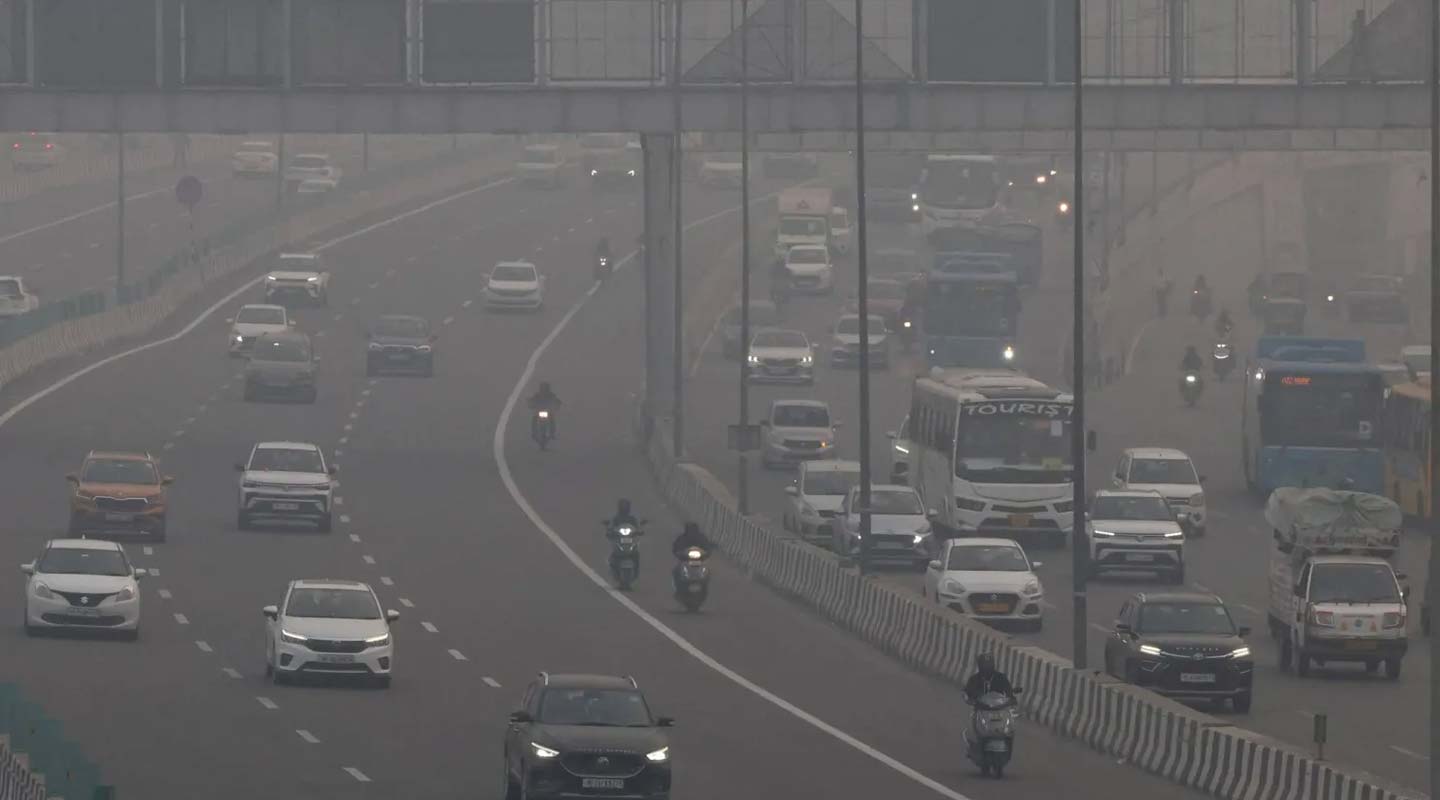
Delhi has taken a title it never wanted. India’s capital overtook Lahore in Pakistan on Friday to become the world’s most polluted city, with hazardous air quality and dropping visibility as smog blanketed the city of 20 million people.
The numbers
The headline reading comes from a Swiss monitoring group. IQAir put Delhi’s air quality index at 334, rated “hazardous,” making it the most polluted major city globally. India’s own regulator painted a worse picture. The Central Pollution Control Board pegged the AQI at 403 and rated it “severe.”
The two figures look inconsistent but are not. The agencies use different scales and methods, so the numbers are not directly comparable. Both indicated severely polluted conditions. For context, an AQI reading up to 50 is considered good with little or no health risk.
A day on the streets
The smog was visible, not just measurable. Videos from Delhi showed cars and motorcycles moving through dense grey smog, with street lights along major roads barely visible through the haze. Reuters photographed vehicles driving past a mist-spraying system installed between roads to control air pollution.
Lahore’s slide down the ranking
The change at the top reflects Lahore improving as much as Delhi worsening. A day earlier, Lahore remained the world’s most polluted city, and several Punjab cities recorded AQI levels of 500 or higher. By Friday morning, Lahore recorded an AQI of 346 at 8am, down from 444 at the same time a day earlier, a drop of 98 points in 24 hours. IQAir logged Lahore at 344, 363 and 371 at different times, with Delhi ranked second before moving ahead.
The two cities have traded the top spot repeatedly, and the blame game between them is familiar. Punjab officials have linked smog to cross-border Diwali fireworks in India, at a time when Lahore’s AQI topped 600.
Why this happens every winter
The cause is a seasonal cocktail. Pollution is a seasonal problem in many parts of northern India and neighbouring Pakistan, as the cold, heavy air of winter traps vehicle emissions, construction dust and smoke from agricultural burning. The result is a regional problem that ignores borders, which complicates any one government’s attempt to fix it.
The wider data is sobering. A recent report found that fine particulates in Pakistan’s air were the highest in the world last year, exceeding WHO guidelines by up to 13 times.
Mass gatherings and public health
The smog arrives just as the festival calendar peaks. Delhi is preparing for Chhath Puja, and authorities plan to deploy over 5,000 police personnel, with security strengthened around the Yamuna ghats, ponds and locations where large gatherings are expected. Delhi and other state schools will remain closed on Nov. 16 for Chhath Puja. Those are scheduled holiday closures rather than pollution measures. The overlap still matters, because thousands of people will spend time outdoors on the riverbanks while air quality is poor.
Health advice for such conditions is consistent. Children, older adults and people with respiratory or heart conditions should limit outdoor exertion, keep windows closed and consider well-fitted masks. Smog days can also worsen asthma and other chronic conditions.
The bigger picture
Being the world’s most polluted city is a ranking that shifts by the hour, as Delhi’s and Lahore’s trade places across a single week. The underlying problem does not shift. Every winter, both cities breathe some of the dirtiest air on the planet, and every winter the same sources contribute.
Short-term measures such as mist sprayers and school closures treat symptoms. Lasting improvement would need coordinated action on crop burning, vehicle emissions and construction dust, ideally with cross-border cooperation. Until then, the title is likely to keep changing hands.


0 Comments