

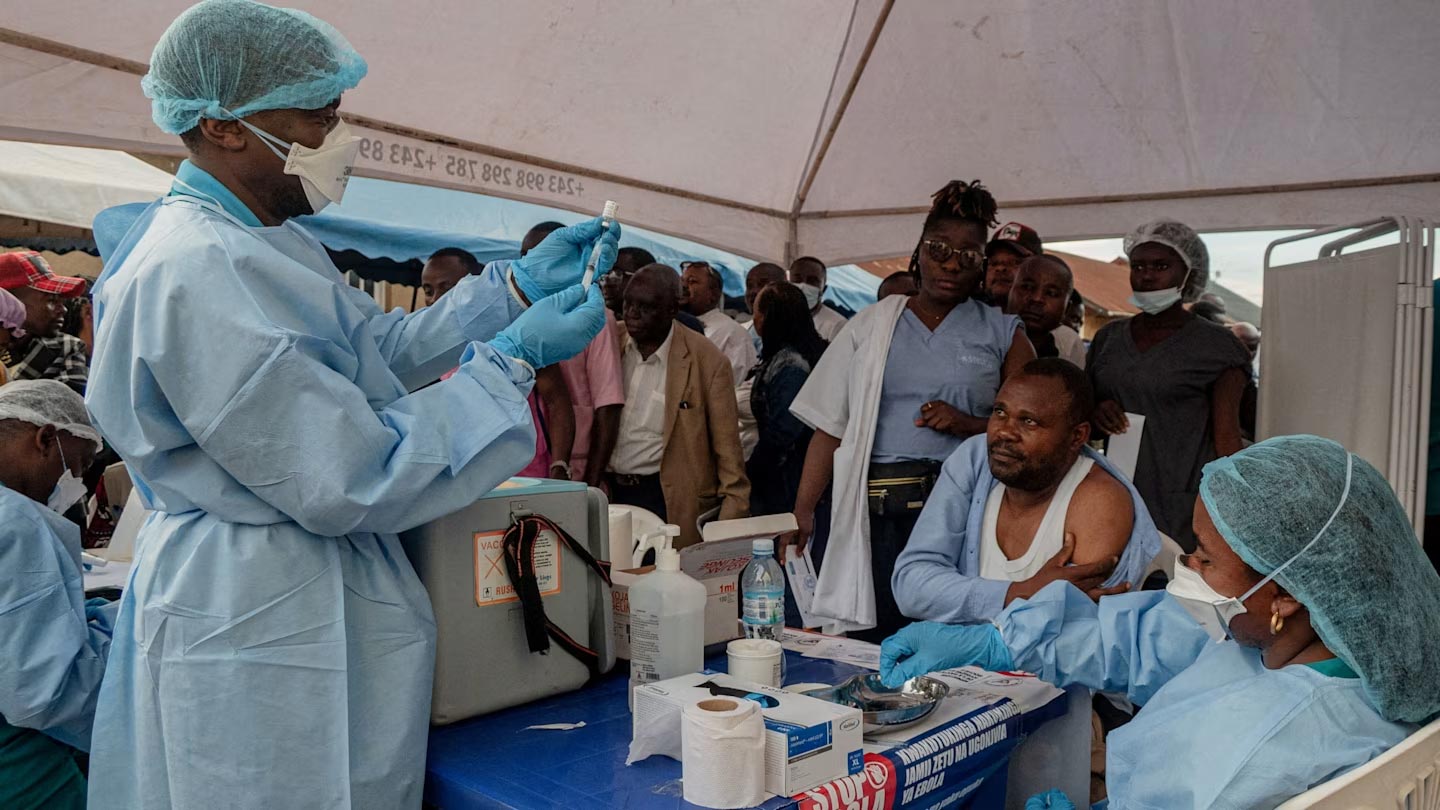
LAGOS/GENEVA – One traveller who landed in Abuja on October 3 has pushed an already record-setting Ebola outbreak into Africa’s most populous country.
Nigeria confirmed an imported case of Ebola Bundibugyo virus disease in the Federal Capital Territory. It was the fifth country to detect the virus since the outbreak was declared in the Democratic Republic of Congo on May 15, 2026. The patient is a woman with recent travel history to Uganda, now in isolation and receiving care. Officials said three rounds of molecular tests identified the Bundibugyo strain, and one said the patient is a diplomat who has deteriorated into multi-organ failure. Nigerian officials have identified 44 contacts to monitor. Reports differ slightly on her timeline: one account says symptoms began October 7 and she was admitted to a private hospital on October 11.
Bundibugyo is a form of Ebola, but the response is harder than for the better-known Zaire strain. The WHO says there is no approved vaccine or specific treatment for Bundibugyo virus disease, though early supportive care can improve survival. In the two previous Bundibugyo outbreaks, in 2007 and 2012, fatality rates ranged from roughly 30 to 50 per cent.
The scale is unprecedented for this strain. Authorities in the DRC have recorded 9,552 cases and 4,602 deaths. Figures differ by source and date. Data cited by the WHO as of October 18 showed more than 9,500 cases and more than 4,200 deaths. The WHO has described it as the fastest-growing Ebola outbreak ever. Africa CDC chief Jean Kaseya said it is already the most geographically widespread Ebola outbreak in history, spanning multiple countries across three regions. He called it an “extremely serious threat,” and cited a fatality rate near 50 per cent.
Kenya is the other active front. The country’s first case involved a Kenyan who had returned from the DRC, tested positive and died in Nairobi. He had lived in the DRC, travelled through Uganda, arrived in Nairobi on October 3, tested positive on October 5 and died the same day. Kenya has since reported nine cases since October 6, and reports describe a second death, a close relative of the first patient. One newsletter puts the number of Kenyans in quarantine at 134.
Investigators are asking whether the two cases are linked. Health Policy Watch reported that Nigeria’s first patient may have crossed paths with Kenya’s index patient at Uganda’s Entebbe Airport. If confirmed, it would show how a single transit hub can seed cases in countries thousands of kilometres apart. The Nigerian patient travelled from Uganda on October 3, the same day Kenya’s index patient arrived in Nairobi.
Uganda, by contrast, offers a measure of encouragement. The WHO declared its outbreak over on August 27 after 20 confirmed cases, 18 recoveries and two deaths, with more than 800 contacts monitored. Isolated imported cases have also been reported in Europe, though sources differ on the country.
The international guidance is notable for what it avoids. The WHO has not recommended restrictions on travel or trade with affected countries. It urged countries to stay vigilant, saying sustained readiness is essential to detect cases early, prevent onward transmission and protect health workers and communities. In Abuja, the WHO and partners are supporting case investigation, contact tracing, infection prevention and control, and supplies of protective equipment. Nigeria has asked all public and private health facilities to maintain the highest vigilance.
Nigeria brings experience to the task. Its swift containment of the 2014 outbreak is often credited to strong command structures, and officials hope those lessons apply. The politics are delicate, with presidential elections due in January and no immediate public comment from President Bola Tinubu when the case was first announced.
The next weeks will show whether the 44 contacts and their contacts stay free of infection through the incubation period, and whether Kenya’s cluster stops growing. With no vaccine to lean on, the response rests on old tools: finding cases early, isolating them, tracing everyone they met and protecting the health workers who care for them. For a region that has watched this outbreak spread across three regions in five months, speed will matter more than anything else.



0 Comments