

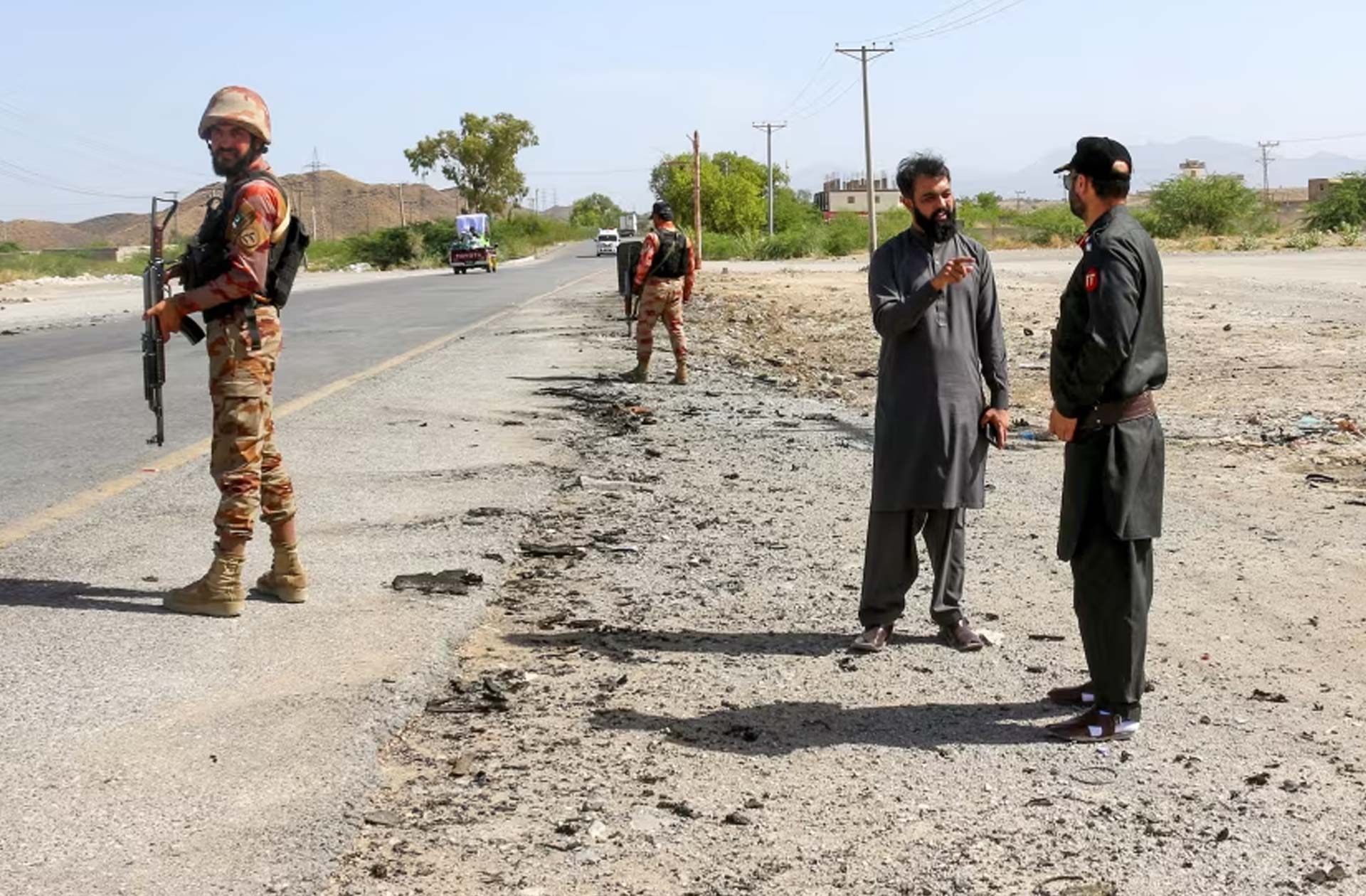
In the rugged, resource-rich terrain of Pakistan’s Balochistan province, September 17 brought yet another entry into what has become a grimly routine ledger of violence. The Baloch Liberation Army, one of the most active separatist militant groups operating in the region, claimed responsibility for an attack near Khuzdar targeting a compound linked to Shafiq-ur-Rehman Mengal, alleging that five people — including a police officer — were killed in the operation.
According to a BLA spokesperson identified as Jeeyand Baloch, the group’s fighters targeted what the organization described as an “important and active base” in the Awak area of Aranji, in the Wadh region of Khuzdar district. The group claimed all five armed men present at the site were affiliated with what it characterized as a “death squad” — a loaded term reflecting the deeply contested narratives that have come to define reporting on Balochistan’s long-running insurgency, where accounts from militant groups, government security forces, and independent observers frequently diverge sharply on the same underlying events.
This latest attack did not emerge from nowhere. It arrives amid what regional security analysts have described as one of the most significant escalations of violence in Balochistan in recent memory — a shift not just in intensity but in geography. Historically, Baloch nationalist insurgents have waged their two-decade armed rebellion against the Pakistani state largely within Baloch-majority districts of the province. But reporting from earlier in September documented a striking and troubling development: violence has surged since June specifically within Balochistan’s Pashtun-majority districts, areas that had largely escaped the fighting that has consumed much of the province’s Baloch-populated regions.
That shift matters enormously for how the conflict is likely to evolve. Balochistan, Pakistan’s largest province by land area, is also its least developed and, not coincidentally, sits atop some of the country’s most significant untapped mineral and resource wealth. It borders both Afghanistan and Iran, giving the region an outsized strategic importance that extends well beyond Pakistan’s domestic politics. Data compiled by regional security monitors indicates that Balochistan has been the country’s most-affected province for violence through most of 2026, with the gap between it and the historically more volatile Khyber Pakhtunkhwa province widening sharply since July — with July itself being characterized by one monitoring group as the deadliest month of the year nationally.
Pakistani officials have not been passive observers of this shift. On September 6, senior security official Naseer met with Balochistan Chief Minister Sarfraz Bugti and other regional political leaders specifically to discuss the deteriorating law-and-order situation and to coordinate a strategy for restoring peace to the province. Bugti himself, addressing the Balochistan Assembly over the preceding weekend, offered an unusually blunt public assessment, describing it as deeply disturbing that both civilians and security personnel were being killed on what had become a near-daily basis.
The security establishment’s response has followed a familiar, if intensifying, pattern throughout 2026: large-scale counter-insurgency operations attributed to killing dozens of militants at a time, alongside a rising toll of Pakistani security personnel losses. Earlier this year, coordinated militant assaults in Balochistan resulted in the deaths of dozens of people, split between security personnel and civilians, prompting extended counter-operations that Pakistani officials claimed had killed scores of insurgents in the weeks that followed. That cycle — coordinated militant attack, government counter-operation claiming significant militant casualties, followed eventually by another coordinated attack — has repeated itself with troubling regularity across 2026, and Wednesday’s Khuzdar attack fits comfortably within that established rhythm.
The stakes extend well beyond the immediate human toll, significant as that already is. Balochistan sits at the center of major economic promises Pakistan’s government has made to both Washington and Beijing, particularly regarding the province’s mineral wealth. Reports earlier this year detailed how Pakistan’s military leadership had personally pitched American officials on opening the country’s mineral resources — many concentrated in Balochistan — to U.S. investment, part of a broader strategy to diversify the country’s economic partnerships beyond its traditional reliance on Chinese infrastructure financing. Continued instability in the very province where these mineral assets are concentrated creates an obvious and persistent complication for those ambitions, a point not lost on international investors weighing the practical risks of large capital commitments to projects located in an active conflict zone.
For residents of Khuzdar and the broader Balochistan region, though, geopolitical calculations about mineral investment likely register as distant abstractions compared to the immediate, lived reality of a conflict that shows no clear signs of abating. As the insurgency’s Pashtun-district expansion continues to unfold alongside its long-standing Baloch-majority battlegrounds, this week’s attack serves as one more grim data point in a conflict whose trajectory, for now, continues to point firmly in the wrong direction.





0 Comments