

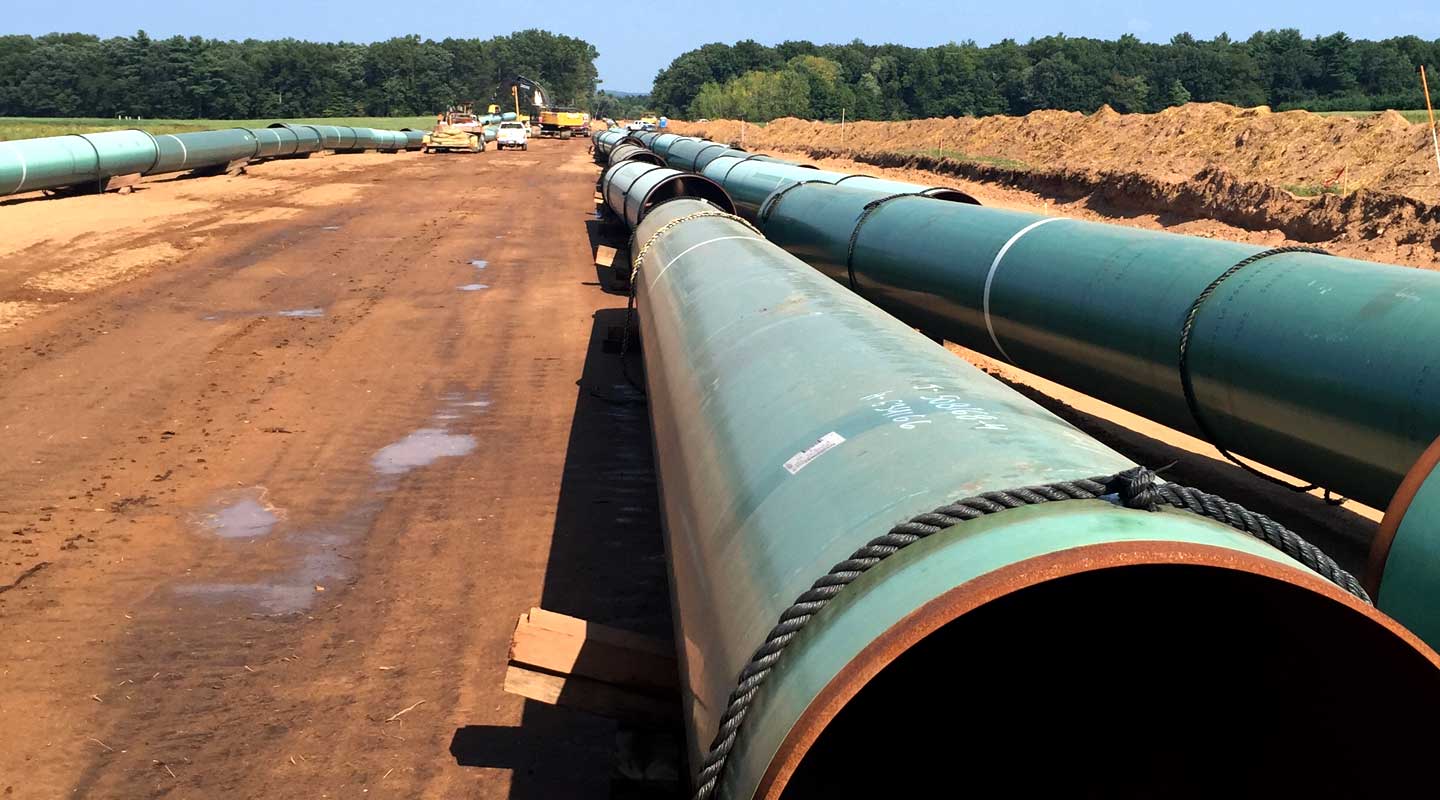
FORT McMURRAY, Alta. – Ottawa has made its first national-interest designation under the Building Canada Act, picking a long-debated West Coast oil pipeline now called Pacific Link.
Prime Minister Mark Carney announced the designation alongside Alberta Premier Danielle Smith on Thursday, Oct. 1. The move puts the project on a faster regulatory track, and it lands at a politically charged moment for both leaders.
The 1,250-kilometre line would carry about one million barrels of crude a day from Bruderheim, Alta., to Delta, B.C. Estimates put the cost between $35.2 billion and $43.7 billion. The route will largely follow the existing Trans Mountain corridor, ending at a marine terminal at Roberts Bank, and Trans Mountain Corporation would develop, build and operate it on behalf of its backers.
Carney framed the project as an exercise in economic independence. He noted that 90 per cent of Alberta’s oil now goes to the United States and said Pacific Link would materially reduce that dependence. He said it would allow an additional one million barrels a day to reach growing Asian markets. That argument has gained force amid the ongoing trade fight with Washington.
Smith, who has championed the pipeline for more than a year, celebrated the decision. She said the era of federal-provincial head-butting over Alberta’s resources was over, adding that it was time to turn the page. The timing is no accident. The announcement comes just weeks before Alberta’s first separatism referendum, and Smith has held the pipeline up as proof that Canada can work for Albertans.
Officials have attached large numbers to the project. Government projections include as many as 140,000 jobs and a boost to GDP of up to $30 billion a year, although CBC reported a figure of about $20 billion annually. Indigenous communities would be offered at least a 10 per cent ownership interest. Pembina Pipeline has expressed interest in a 10 per cent private-sector stake, with an option on up to another 10 per cent once the line is operating.
The designation does not guarantee construction. It shifts the focus from whether the project is feasible toward planning, but the final route and financing remain unresolved. Conditions are to be finalized by Sept. 1, 2027. Officials said the review would have taken five years under the previous national process. The streamlined approach is exactly what the Building Canada Act was designed to deliver, and critics say that is the problem.
Opposition has been swift. Federal NDP Leader Avi Lewis accused the Liberals of rushing through a project he says is not in the national interest. Environmental groups have raised concerns about climate commitments and the risk of tanker traffic off the B.C. coast. One critic argued that even with a rushed review, the pipeline could not be in service until well past the peak of global oil demand. The longstanding ban on oil tankers along the northern coast would be maintained.
Consultation with Indigenous nations is the most sensitive issue. The Logic reported that a majority of the Indigenous communities consulted said they were not prepared to support the designation, with First Nations saying they needed more time. Court challenges and negotiations over consent are likely to shape the project’s timeline more than any federal order.
Business groups were enthusiastic. The Canadian Chamber of Commerce called Pacific Link a standout project for energy and economic security. Industry will have to decide whether to commit to the growth needed to fill the line. Carney said he is confident producers will want to spend on oilsands expansion, and a cabinet explanatory note said producers have the financial capacity to fund a significant share of that growth.
The politics extend beyond Alberta. British Columbia, where the pipeline would end, has historically been the toughest audience for such projects. Ottawa says it is working with the B.C. government on the port infrastructure involved, including Roberts Bank 2. How the province responds will help determine whether this is a turning point or another chapter in a long-running dispute.
For now, the designation is a signal more than a shovel in the ground. It tells investors and trading partners that Ottawa is willing to use its new powers to move big energy projects forward, and it tells Albertans that the federal government is listening. Whether that is enough to settle either the economics or the politics will take years to answer.

0 Comments