

NASA#2007945
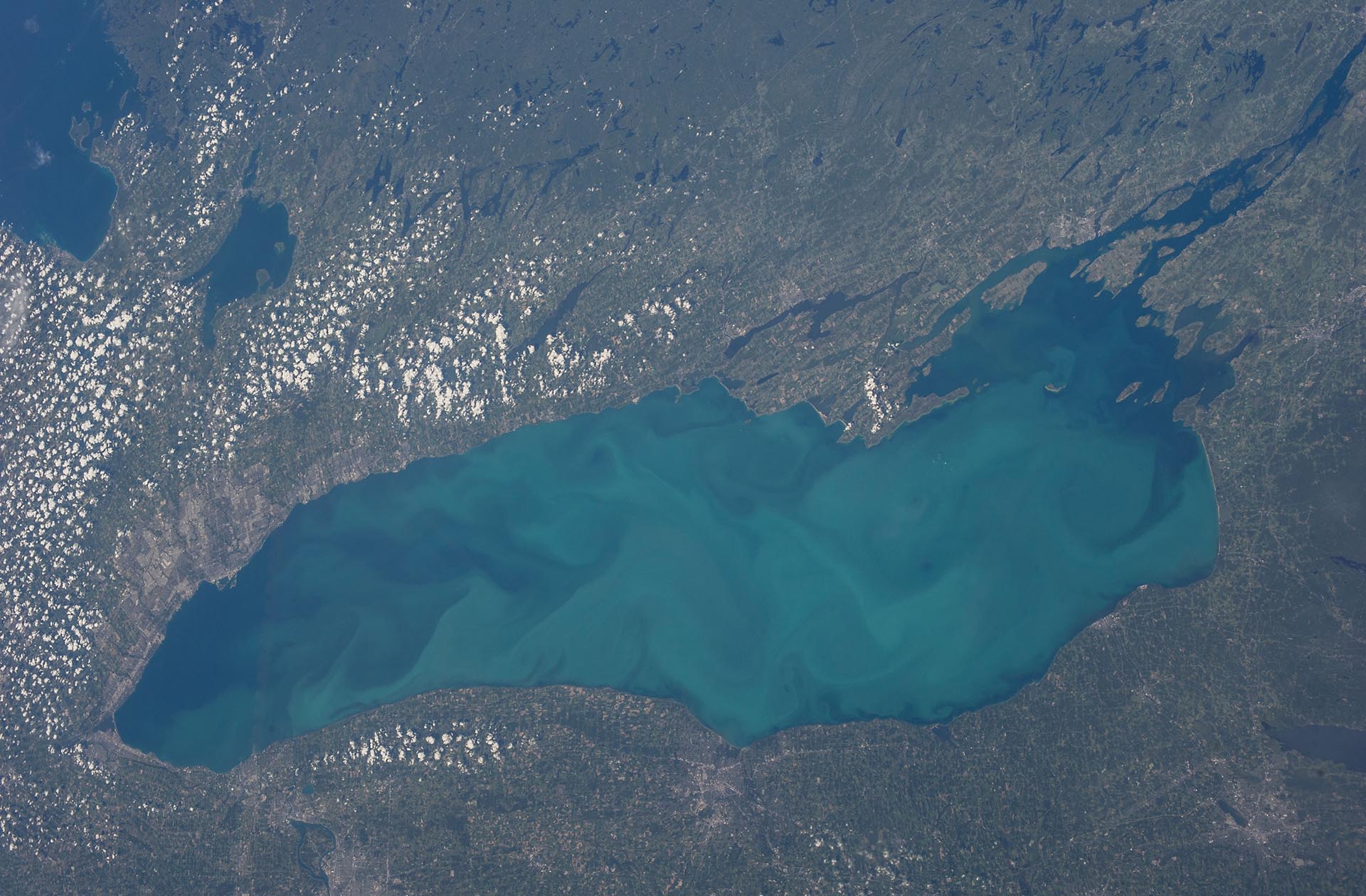
Lake Ontario may look limitless from Toronto’s waterfront, but beneath its vast surface lies an ecosystem under sustained pressure. Shared by Canada and the United States, the lake supports roughly 11 million people and has played a central role in the region’s economic and cultural development.
That abundance, however, has come at a cost. Centuries of development have transformed the lake through dams, canals, urban expansion, pollution, industrial activity, and habitat loss. By the mid-20th century, Lake Ontario had become one of the most degraded of the Great Lakes.
Environmental regulations and cleanup efforts have produced meaningful improvements, but the recovery remains incomplete. The lake’s overall condition was rated **“fair”** in the 2022 State of the Great Lakes assessment, with several indicators—including invasive species, hardened shorelines, and coastal wetland conditions—rated poorly.
New challenges are emerging. Toxic algae blooms are increasing, while storm-driven sewage overflows, leaking infrastructure, agricultural runoff, fertilizers, pesticides, and climate change continue to threaten water quality. Nitrogen pollution from agriculture has become an especially important concern as nitrate levels have risen even while phosphorus levels have declined.
The lake’s problems also cross political boundaries. Pollution entering through tributaries and the Niagara River demonstrates that protecting Lake Ontario requires cooperation across the entire Great Lakes basin. Neither Canada nor the United States can solve the problem alone.
The debate over what the lake should be called may generate headlines, but its real crisis is environmental. Lake Ontario has demonstrated remarkable resilience, yet resilience should not be mistaken for invulnerability.
After decades of exploitation and partial recovery, the message is clear: **Lake Ontario needs sustained investment, stronger environmental protections, responsible development, and renewed Canada–U.S. cooperation. The question is no longer whether the lake matters—it is whether we are willing to protect it.**





0 Comments