

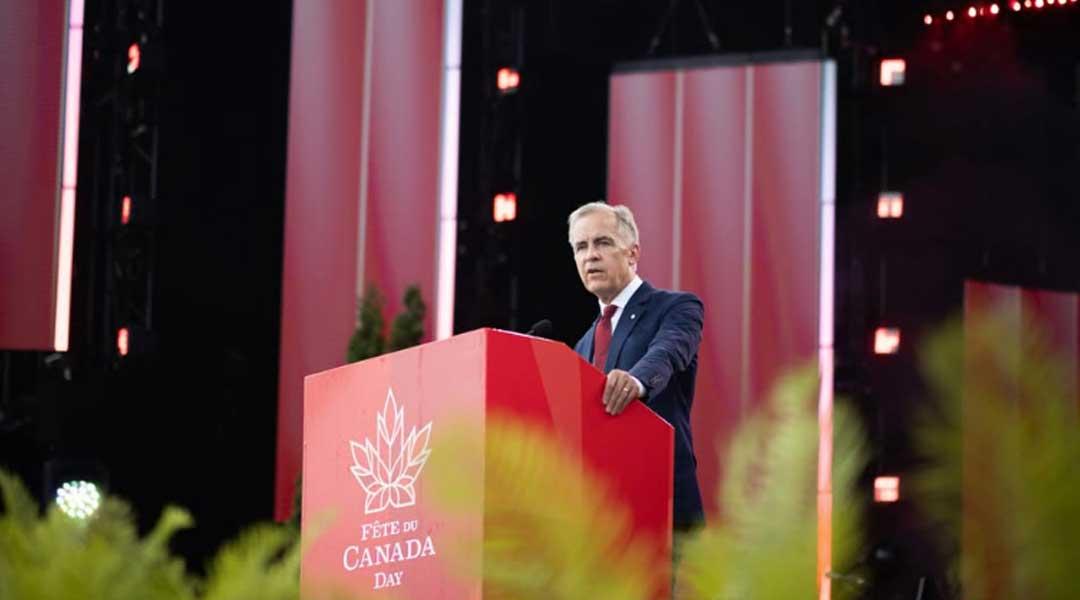
Why Ottawa walked away from Washington—and how Canada plans to withstand the economic fallout
Prime Minister Mark Carney says Canada has rejected the latest US trade proposals because they demanded too much while offering too little. Following the suspension of Canada–US trade negotiations on August 22, 2026, Carney argued that Canada cannot accept an agreement that weakens its economy, undermines key industries, or compromises national sovereignty.
For decades, Canada benefited from a relatively stable and increasingly integrated economic relationship with the United States. That era, Carney said, has changed. Washington is increasingly using tariffs and economic dependence as negotiating tools, forcing Canada to rethink its economic strategy.
Canada’s objective was never to secure a deal at any cost. Ottawa sought an agreement that protected Canadian workers, provided businesses with certainty, preserved access to the American market, and respected Canada’s independence.
According to Carney, recent American demands failed those tests.
The United States has imposed tariffs on Canadian products while repeatedly changing its justification—from fentanyl and technology taxes to agricultural policy, aviation, alcohol, infrastructure and even a Canadian television advertisement. Washington has also argued that its merchandise trade deficit with Canada demonstrates an unfair relationship.
Carney rejects that interpretation.
Canada is a critical supplier of American energy, providing most of the natural gas and electricity imported by the United States and a substantial share of its crude oil. Canada is also one of America’s most important customers. Canadian consumers purchase hundreds of billions of dollars in American goods and services every year, while Canadian exports help reduce costs for American consumers and businesses.
In Carney’s view, the relationship is therefore fundamentally one of mutual economic dependence—not exploitation by one side.
During the latest negotiations, Canada offered significant concessions. Ottawa was prepared to remove remaining retaliatory tariffs on strategic sectors such as steel, aluminum and automobiles if the United States substantially reduced its own tariffs. Canada was also prepared to encourage provinces to restore American alcohol products to store shelves and take administrative measures concerning supply management.
But some issues were never negotiable.
Canada would not compromise its sovereignty, French-language protections, cultural policies, or the foundations of key domestic industries. According to Carney, Washington continued pressing on some of these issues until the final stages of negotiations.
Although progress had been made toward a possible agreement, new American demands ultimately changed the equation. Carney described the proposed terms as economically damaging, unfair and insufficient to justify the concessions being requested.
The negotiations were therefore suspended.
Canada’s Immediate Response
Canada will respond to Washington’s new tariffs with its own measures, matching them dollar for dollar in targeted sectors. The measures are expected to affect industries including steel, dairy, appliances, agricultural equipment, pulp and paper, and electronics, as well as products subject to additional US tariffs.
Carney acknowledged that retaliation carries costs. Some Canadian consumers could face higher prices and fewer choices, while American businesses and workers who had little influence over Washington’s policies could also be affected.
Nevertheless, Ottawa believes the response is necessary to protect Canadian industries and provide leverage in future negotiations.
The larger strategy extends well beyond tariffs.
Carney says Canada’s long-term answer is to become stronger domestically while reducing excessive dependence on the American market. That means expanding infrastructure, energy production, housing, defence capabilities, critical-mineral development and domestic manufacturing.
The government has already identified dozens of major infrastructure projects involving ports, mines and energy corridors, representing hundreds of billions of dollars in potential investment. Ottawa is also accelerating housing construction and investing in local infrastructure such as hospitals, public transit and community facilities.
Energy independence is another major priority. Canada plans to significantly expand its electricity grid while developing nuclear power, LNG, renewable energy and low-carbon oil and gas.
Defence and strategic industries will also receive substantial investment as Canada seeks greater control over its economic and national security.
Looking Beyond the United States
Perhaps the most important part of Carney’s strategy is trade diversification.
Canada has been pursuing new economic and security agreements across multiple regions, expanding access to markets in Asia, the Middle East and elsewhere. Ottawa plans to deepen relationships with ASEAN, India and the European Union while encouraging Canadian companies to sell more products outside the United States.
The goal is not to replace the American market overnight. That would be unrealistic. Rather, Canada wants to ensure that no single foreign government can exercise disproportionate economic leverage over the country.
Domestic economic integration is equally important. Ottawa says it has removed federal barriers to internal trade and is working with provinces and territories to make it easier for workers, businesses and investment to move across Canada.
The government is also promising measures to encourage Canadian purchasing, investment and production.
Supporting Canadians Through the Transition
Carney acknowledges that economic diversification will take time. To cushion the immediate impact of the trade conflict, the government has committed billions of dollars to support workers and businesses affected by American tariffs.
The measures include assistance for small and medium-sized businesses investing in equipment, productivity and supply-chain resilience, as well as financing for larger companies and assistance for industries attempting to retool and enter new international markets.
Ottawa is also pointing to tax reductions, housing measures and financial assistance for families as ways to ease the pressure on Canadians while the broader economic transformation takes place.
The central message is one of resilience.
Canada, Carney argues, enters this confrontation with significant advantages: a strong fiscal position, abundant natural resources, skilled workers, trusted institutions, expanding international relationships and access to growing global markets.
The trade dispute with Washington may therefore become more than a battle over tariffs. It could mark the beginning of a fundamental shift in Canada’s economic strategy.
For decades, Canada’s prosperity was closely tied to the United States. That relationship will remain important, but Carney’s message is that dependence does not have to mean vulnerability.
Canada’s objective is to become more self-reliant, more internationally connected and more capable of choosing its own economic direction.







0 Comments