

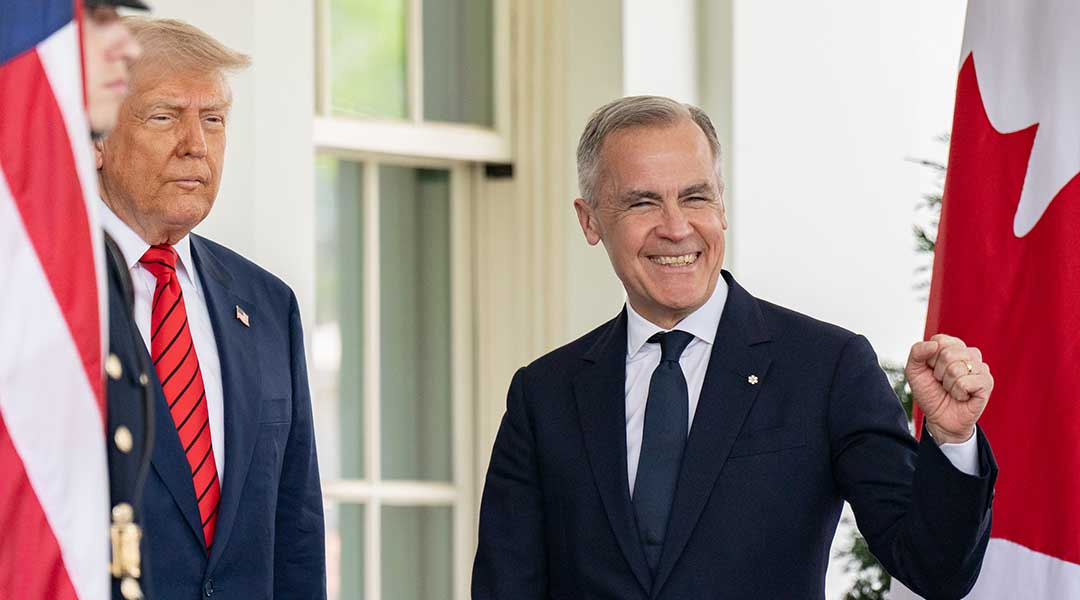
 The most important question following the sudden collapse of Canada–US trade negotiations is not simply who walked away from the table or which demands were made on Friday night. The bigger question is what Washington does next.
The White House has already established its version of events: President Donald Trump has suggested that a deal with Canada was essentially within reach and that Ottawa was being offered favourable terms. Prime Minister Mark Carney, however, argues that the final American demands were unfair, economically damaging, and incompatible with Canadian sovereignty. The interpretation that ultimately prevails in Washington could shape the next phase of the dispute.
Several outcomes remain possible. The two governments could quickly return to negotiations. They could enter a temporary cooling-off period. Washington could attempt to rebuild the negotiations through US Trade Representative Jamieson Greer. Or the White House could choose escalation.
Given the pattern of recent American trade policy, Canada should prepare seriously for the final possibility.
Trump could increase tariff pressure before returning to the negotiating table. Yet his ability to sustain that pressure will not be unlimited. Inflation and affordability remain important domestic concerns in the United States. Political pressure will intensify as the midterm elections approach. Governors, senators, manufacturers, retailers, farmers, and other businesses dependent on deeply integrated North American supply chains may resist policies that increase their costs.
Canada should pay particular attention to political and business reactions in American border states and manufacturing centres. If tariffs begin hurting American companies and consumers, domestic opposition could become an important constraint on Washington.
Mexico will also be critical.
The United States has deliberately pursued separate negotiations with Canada and Mexico rather than treating North America as one integrated economic bloc. That gives Washington additional leverage: Ottawa and Mexico City can potentially be played against one another.
Canada and Mexico therefore have a strategic interest in maintaining communication and identifying areas where their interests overlap. Both countries should be asking whether a fragmented approach to North American trade ultimately weakens the continent’s economic position against the rest of the world.
The dispute also has a much larger dimension than tariffs.
Trump’s approach to economic interdependence increasingly treats access to the American market as leverage—not only for economic concessions but also for political ones. For Canada, that raises questions involving culture, language, critical minerals, digital policy, agricultural supply management, energy, and the freedom to establish commercial relationships with countries outside North America.
These are ultimately questions of sovereignty.
Seen from that perspective, Carney’s decision to reject the latest American demands is about more than the immediate economic consequences of tariffs. It reflects a broader question: **How much control should Canada retain over its own economic and public-policy choices when its largest trading partner possesses enormous leverage?**
The answer will depend partly on what Canada does next.
One of the most encouraging developments has been the emergence of broad national support for the principle that economic pressure cannot automatically justify surrendering policy autonomy. Canada possesses remarkable strategic assets: energy resources, critical minerals, agricultural capacity, financial capital, technological expertise, skilled workers, and substantial industrial capabilities.
But its less tangible advantages may be just as valuable.
Canada has trusted institutions, a highly educated population, strong international relationships, and a reputation for reliability and stability. Those assets can attract investment, strengthen diplomatic relationships, and help Canadian companies enter markets beyond the United States.
The challenge is turning those advantages into resilience.
Canada needs stronger internal trade, greater domestic productive capacity, better infrastructure, expanded export markets, and a deliberate strategy for reducing excessive dependence on any single foreign market. Diversification should not mean abandoning the United States; the American market will remain enormously important. It means ensuring that Canada has credible alternatives.
That requires more than temporary responses to Trump’s tariffs. It requires a long-term national economic strategy.
The coming months could be difficult. Businesses may face uncertainty, consumers may encounter higher prices, and governments may confront pressure to compromise simply to restore stability.
But Canadians should avoid judging the outcome solely by what happens tomorrow.
The more important measure of success is what Canada looks like a decade from now.
If this crisis forces Canada to become more productive, more innovative, more internationally connected, and less vulnerable to unilateral pressure from any foreign government, then today’s confrontation could ultimately become a turning point.
Canada’s real objective should not be merely surviving Trump’s trade war. It should be building an economy strong enough that no single foreign government can dictate Canada’s economic choices.






0 Comments